PHOTOSCREENING
Detect Vision Risk Factors With Immediate Results
Catch amblyopia risk factors in children as young as 1 year old – with simple photos and instant results.
TRUSTED BY LEADING PROVIDERS ACROSS THE COUNTRY
HOW IT WORKS
Results in a flash.
As simple as taking a picture, with guided on-screen protocols at every step.
1. Position the patient 40 inches away.
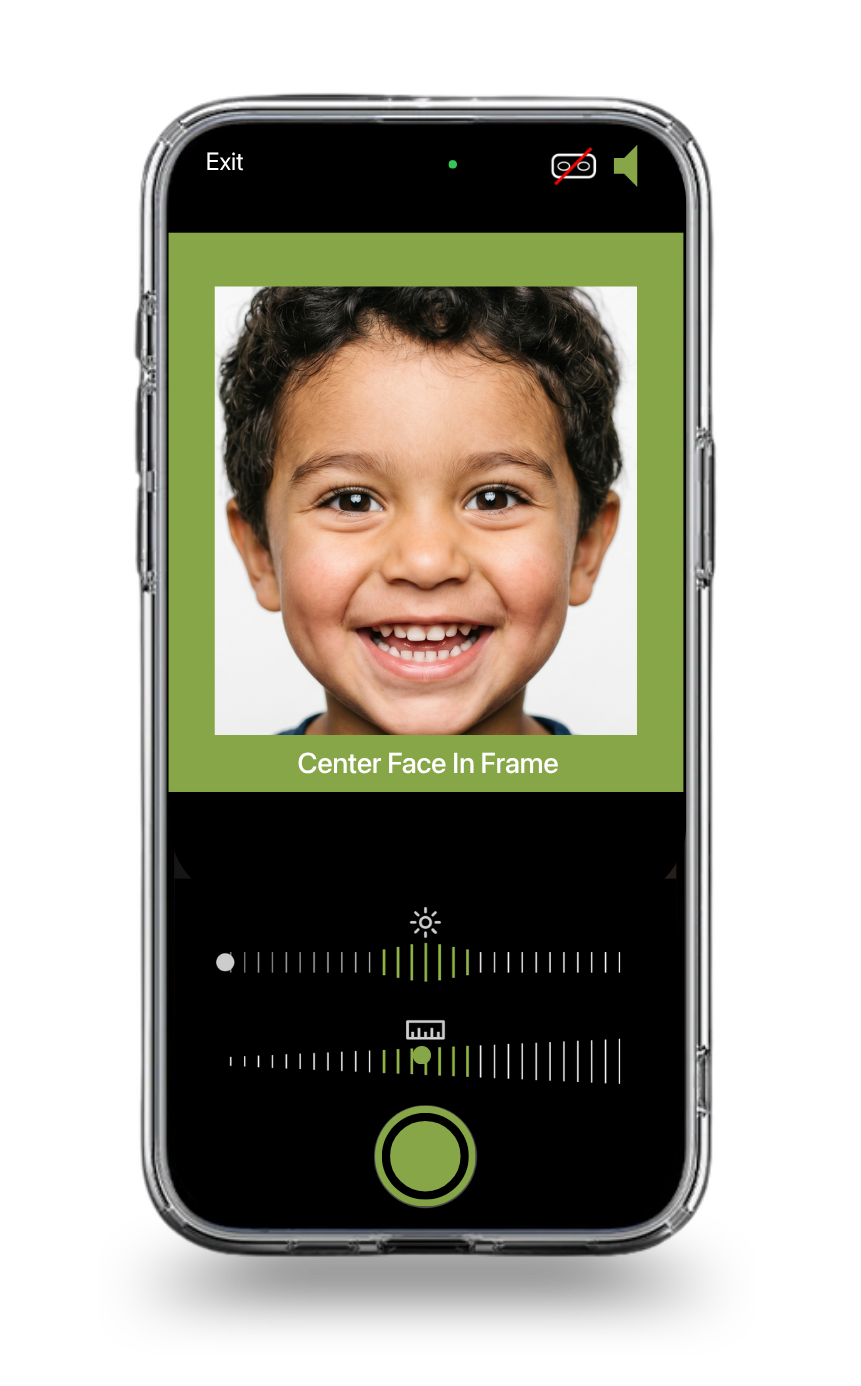
2. Follow guided instructions to capture photos.
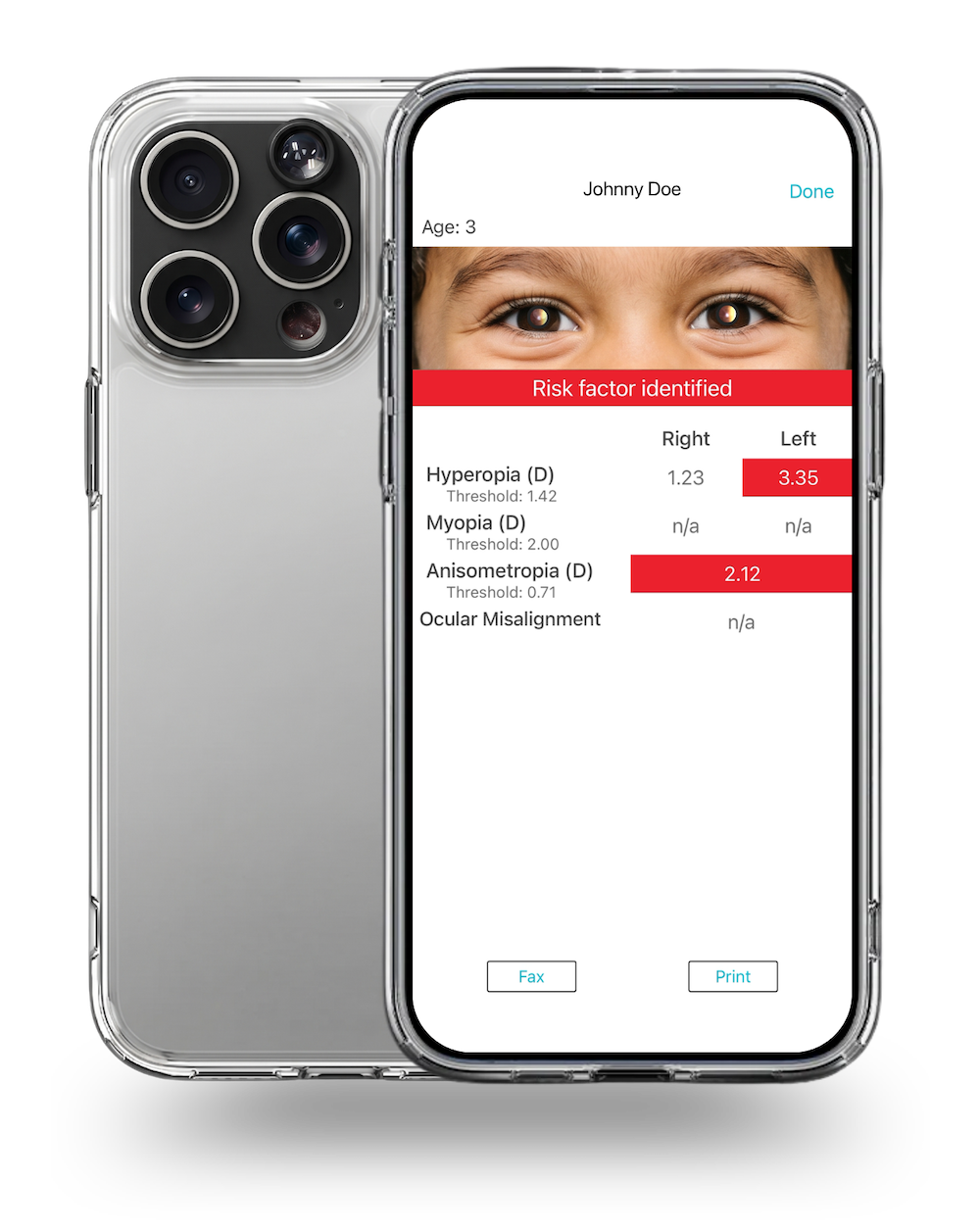
3. Receive immediate results.
KEY FEATURES
Designed for clinical users.
Photoscreening on the GoCheck MultiScreener isn't a consumer app on a phone. It's technology designed to simplify the screening experience, meet AAP guidelines, and return objective results.
For Ages 1 and Older
Clinically validated for the window when risk factor detection can help prevent amblyopia from developing.
Innovative Technology
Uses GoCheck Kids' familiar smartphone-based device – with optional lights and sounds to attract the child's attention.
Syncs to Your EHR
Results, recommendations, and the captured photo post directly to the patient chart — reducing double entry and saving admin time.
Detects Key Risk Factors
Bilateral screening including hyperopia (farsightedness), myopia (nearsightedness), and anisometropia.
Reimbursable
May be eligible for CPT 99177 and 99174, so photoscreening pays for itself instead of running as a loss-leader.
Aligned With AAP & AAPOS
Meets recommended guidelines for routine well-child instrument-based screening. FDA-regulated medical device.
Ready to Get Started?
1in 4
SCHOOL-AGED CHILDREN REQUIRE VISION TREATMENT (APPROX.)1
WHY PHOTSCREENING MATTERS
Nearly half of young children have never had their vision tested.
When it comes to learning, engaging with the world, and hitting developmental milestones, perhaps nothing is more important to a child than their vision – and yet, nearly half of children under 5 have never had their vision tested.1
Photoscreening is a clinically effective method for capturing images of a child’s eyes and analyzing them for amblyopia risk factors (lazy eye) – which can lead to long-term vision loss. That’s why the AAP recommends photoscreening at annual well-child visits as early as 1 year old, to screen young or pre-verbal patients.
FREE DOWNLOAD
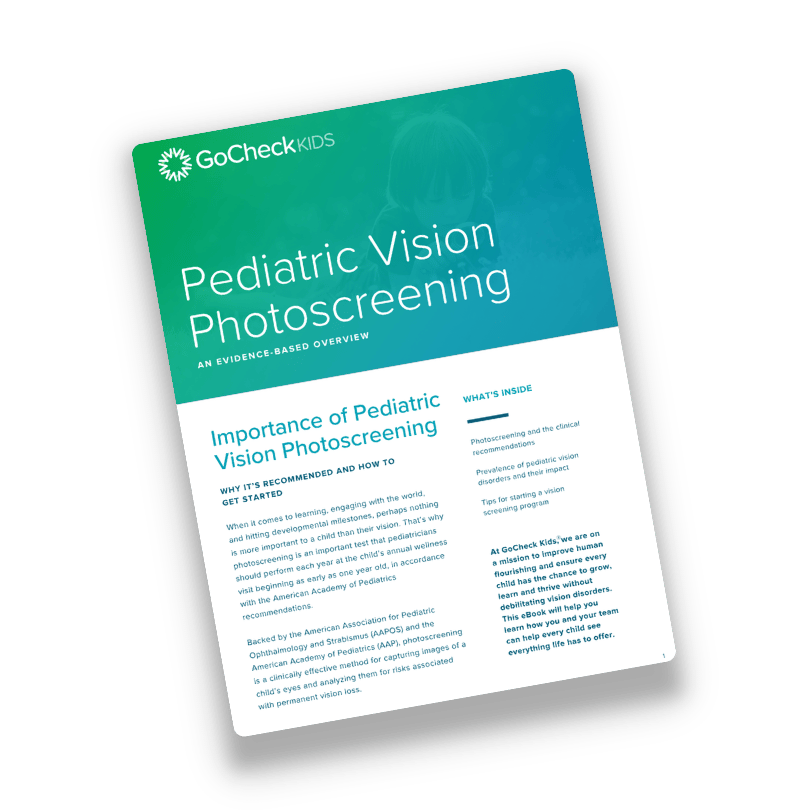
Get the Photoscreening eBook.
Pediatric Vision Photoscreening — the clinical case, the reimbursement playbook, and the implementation steps your team needs to roll out photoscreening confidently.
GoCheck photoscreeners have been a fantastic tool for our team. The technology is simple to use, even during a fast-paced clinic day, and we appreciate how it helps us provide the best care by catching vision issues that might otherwise be missed.
Bridgett Anthony
Director of Clinical Operations | VIP MidSouth
The tool is fast, easy to use, and integrates seamlessly into busy clinic workflows. We have identified vision and eye concerns that might otherwise have gone undetected, enabling more timely interventions that can make a lifelong difference for our patients.
Kendra Nagey
Director of Pediatrics | Mountain Family Health Centers
The screening process is both efficient and convenient, allowing us to screen our pediatric patients quickly, accurately and with minimal disruption to our workflow. The screening process is user friendly and non-invasive, which has been greatly appreciated by both our staff and the families we serve.
Araceli Morales
Practice Manager | Robert Barry, M.D.
GoCheck Kids has been a game-changer for our pediatric primary care clinic. Our patients and families love the ease and comfort of the screenings, and our staff genuinely enjoy using the technology. It's an affordable and effective tool that supports our commitment to delivering high-quality, proactive care.
Rachel Chiorean
Clinical Nurse Manager | UCSF
FAQ
Frequently Asked Questions
-
What conditions does photoscreening detect?
GoCheck photoscreening detects the presence of conditions that are Amblyopia (lazy eye) risk factors, including Hyperopia (farsightedness), Myopia (nearsightedness), and Anisometropia (asymmetrical refractive power). It also alerts the clinician to possible ocular misalignment. Children who show risk factors are referred to a pediatric eye care specialist.
-
Can I connect photoscreening results to our EHR?
Yes. We offer direct, bi-directional integrations with Epic, athenahealth, Office Practicum, and Azalea Health — results land in the patient chart automatically. For any other EHR, results deliver via eFax, print, or download.
-
What age range is photoscreening validated for?
The GoCheck Kids photoscreener is clinically validated for children ages 1 year and older.
-
How does reimbursement work for photoscreening?
Photoscreening may be eligible for reimbursement under CPT 99177 (instrument-based screening, bilateral, with onsite analysis)and CPT 99174 (instrument-based screening, bilateral, with remote analysis). Actual reimbursement depends on payer rules, state regulations, and patient eligibility.
-
How long does a typical screening take?
The photoscreener captures and produces an image instantly. The entire photoscreening process typically takes under 1 minute, from start to finish, with immediate results available.
