VISUAL ACUITY
Modern Screening Without the Wall Chart
GoCheck Kids' visual acuity test helps determine if a child can see clearly – delivering fast, objective results from our smartphone device, just 10 feet away.
TRUSTED BY LEADING PROVIDERS ACROSS THE COUNTRY
HOW IT WORKS
Quick. Simple. Reliable.
Now you can screen from anywhere, with only 10 feet of distance and our handheld device.
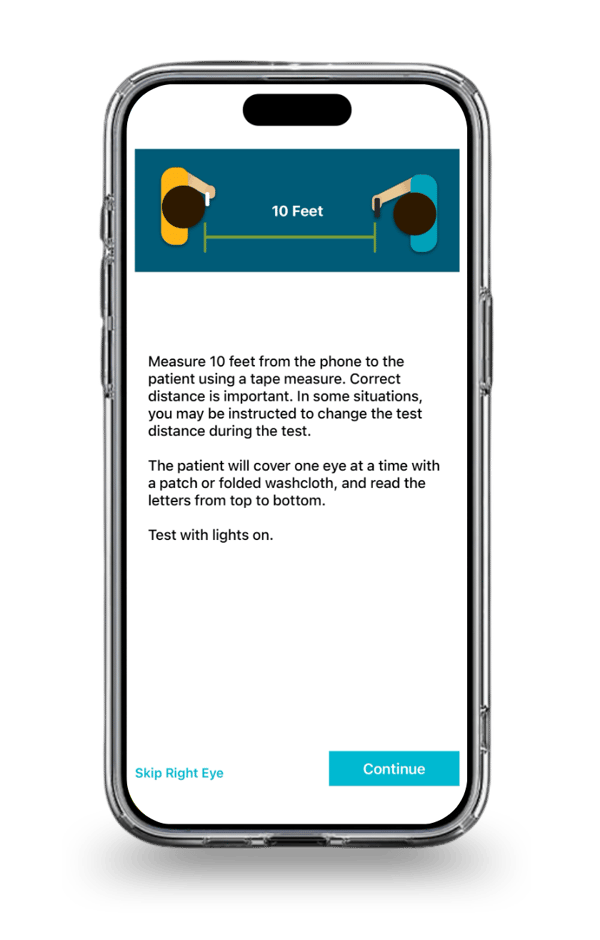
1. Situate the patient 10 feet away.
2. Have the patient read optotypes.
3. Receive immediate results.
KEY FEATURES
Modern protocols, built for everyday care.
Not all vision screening is created equal. Eye charts have evolved significantly over the years, and using outdated methods can lead to missed vision problems or inaccurate results. GoCheck Kids brings the most up-to-date visual acuity testing protocols into everyday pediatric care.
For Ages 4 and Older
Clinically validated for the age range when a child can verbally respond to visual cues – and when visual acuity loss may begin to affect learning.
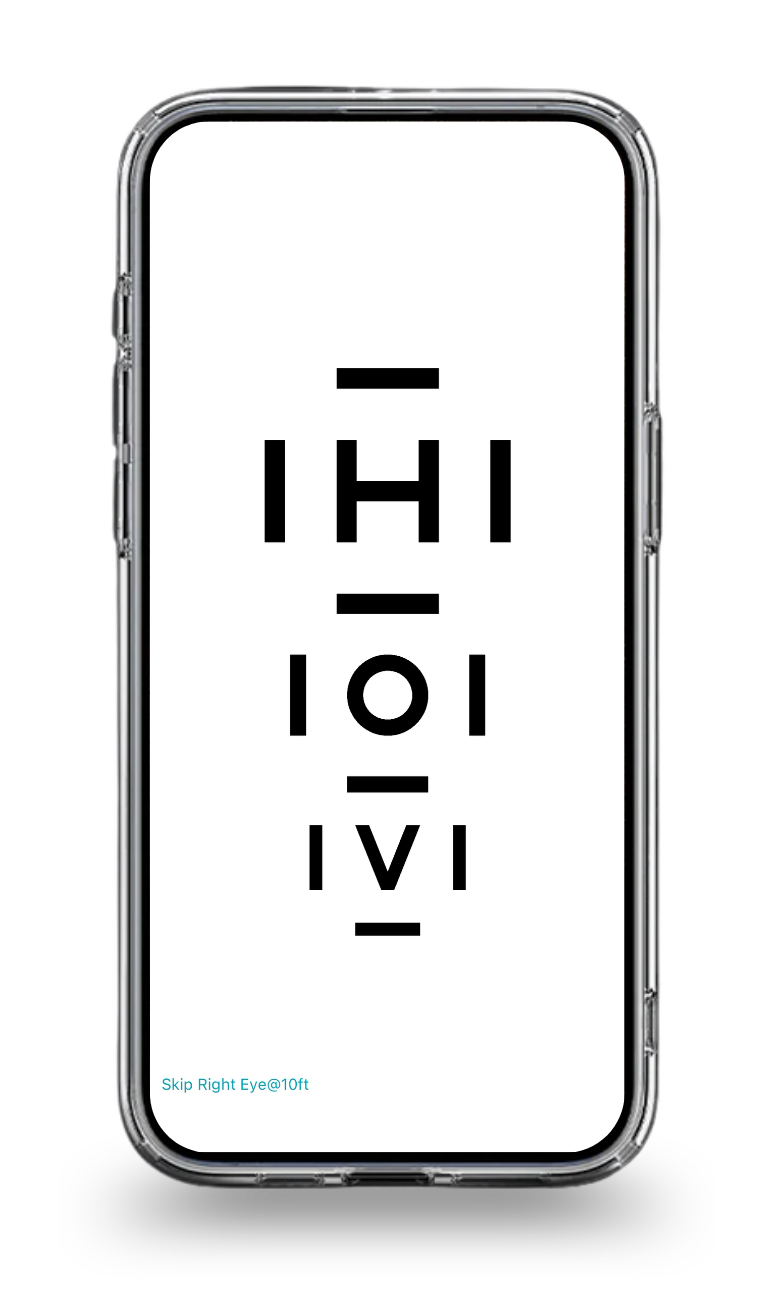
HOTV & Sloan Optotypes
Screens each eye individually using age-appropriate HOTV or Sloan optotypes, aligned with AAP and AAPOS recommendations.
Under 2 Minutes
Average screening takes less than two minutes, fitting into well visits without disrupting your workflow.
10 Feet, Not 20
Requires only a 10-foot distance between the device and the patient — easy to use in almost any exam room, without wall charts or special setups.
Randomized in Real Time
Optotype order shuffles on every screening to prevent memorization and ensure each child is tested on what they can actually see.
Reimbursable
May be eligible for CPT 99173 – visual acuity screening, quantitative, bilateral – some providers find that screening pays for itself.
Ready to Get Started?
OF VISION LOSS CAN BE TREATED OR PREVENTED IF DETECTED EARLY
WHY VISUAL ACUITY MATTERS
Clear vision leads to better outcomes.
Visual acuity testing measures how clearly a child can see – an essential part of their ability to learn, engage, and navigate their environment. When vision impairments go undetected, they can lead to academic struggles, developmental delays, and social or behavioral challenges.
Starting at age 4, visual acuity screening helps identify these issues early to support a child's healthy development. After a child has been screened, a provider can refer them to an ophthalmologist, if needed.
FREE DOWNLOAD
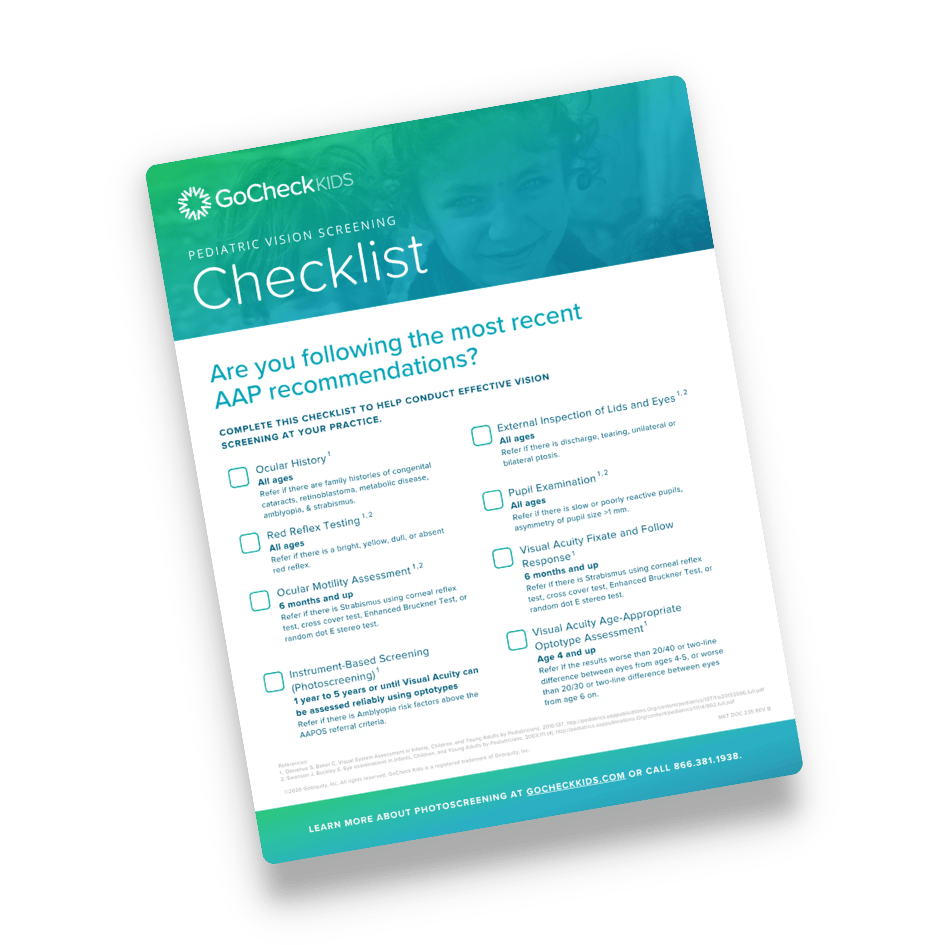
Get the Vision Screening Checklist.
Pediatric Vision Screening Checklist — make sure your practice is following the AAP’s recommendations at every well-child visit.
The tool is fast, easy to use, and integrates seamlessly into busy clinic workflows. We have identified vision and eye concerns that might otherwise have gone undetected, enabling more timely interventions that can make a lifelong difference for our patients.
Kendra Nagey
Director of Pediatrics | Mountain Family Health Centers
GoCheck Kids has been a game-changer for our pediatric primary care clinic. Our patients and families love the ease and comfort of the screenings, and our staff genuinely enjoy using the technology. It's an affordable and effective tool that supports our commitment to delivering high-quality, proactive care.
Rachel Chiorean
Clinical Nurse Manager | UCSF
GoCheck Kids has been our favorite medical device for our clinic over the past 7 years. It is simple to use, accurate, and helps keep the workflow in our busy clinic moving faster. We love that it is on a smartphone so we can have several available for use and not a huge piece of equipment that has to be lugged around.
Dr. Kody Finstad
Pediatrician | Mercy Clinic
GoCheck photoscreeners have been a fantastic tool for our team. The technology is simple to use, even during a fast-paced clinic day, and we appreciate how it helps us provide the best care by catching vision issues that might otherwise be missed.
Bridgett Anthony
Director of Clinical Operations | VIP MidSouth
FAQ
Frequently Asked Questions
-
At what age should we start visual acuity screening?
The AAP recommends starting visual acuity screening as soon as children can reliably complete an optotype-based screening, typically around age 4. For children younger than 4 – or for any child who can't reliably complete an acuity test – GoCheck photoscreening provides an instrument-based screen as early as 1 year of age.
-
Which optotypes does the GoCheck Visual Acuity test use?
GoCheck Visual Acuity uses recommended optotypes based on age. HOTV optotypes are used for children under age 7, and Sloan optotypes are used in a modified-ETDRS approach for ages 7 and older. These optotypes are aligned with AAP and AAPOS recommendations and the device automatically selects the appropriate optotype based on the patient's age.
-
Why is 10 feet of distance enough? Don't I need a 20-foot lane?
Traditional wall charts are designed for a 20-foot testing distance. The GoCheck MultiScreener's digital chart is designed so that an optotype displayed at the device's screen size at 10 feet produces the same visual angle as the standard chart at 20 feet – so results are equivalent, but you don't need a dedicated hallway or screening room.
-
How long does a typical visual acuity screening take?
Under two minutes on average, including the right and left eye. Letter order randomizes in real time so each line is fresh, and the device guides you through each step — no transcription, no manual scoring sheets.
-
Is visual acuity screening reimbursable?
GoCheck Visual Acuity may be eligible for reimbursement under procedure code 99173 — visual acuity screening, quantitative, bilateral. Actual reimbursement depends on payer rules, state regulations, and patient eligibility.
